Plain-language training
Lessons avoid unnecessary academic language and focus on what new workers need to understand before and during real calls.
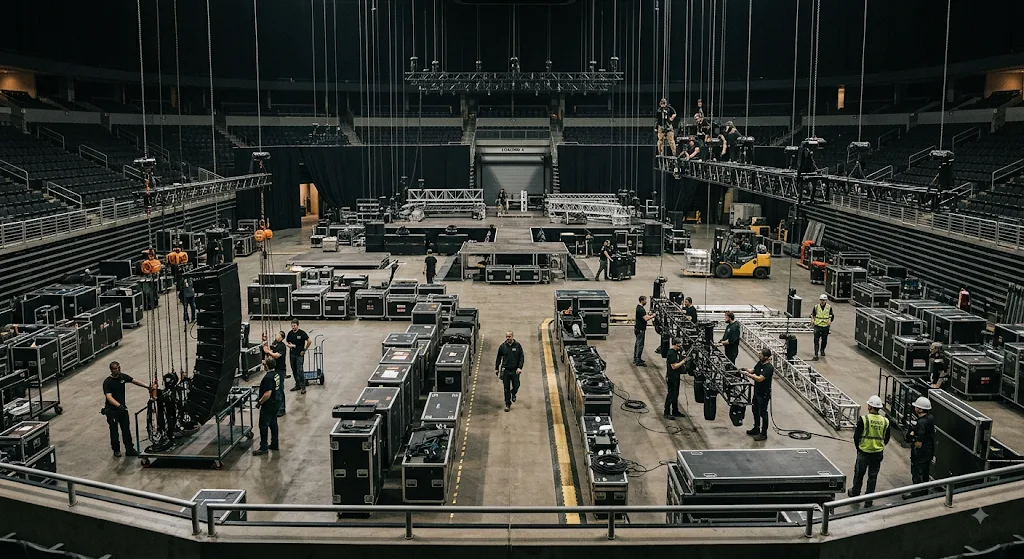
The Crew Blueprint is a practical training platform built to help new and developing live event workers understand the jobsite, communicate clearly, work with awareness, and build a path beyond simply being new on the call.
The Crew Blueprint combines job-readiness training, safety awareness, and practical field reference to help new workers arrive prepared and reliable. This is orientation and preparation—not a substitute for hands-on training, employer instruction, or specialized work authorization.
Live event work can be difficult to enter because much of the job is learned on-site, under pressure, around moving equipment, tight timelines, and experienced crews. The Crew Blueprint is being built to close that gap with practical, safety-aware preparation.
Lessons avoid unnecessary academic language and focus on what new workers need to understand before and during real calls.
Training is centered around load-ins, show calls, load-outs, venues, departments, crew structure, and expected jobsite behavior.
The long-term system supports department pathways, practical resources, leadership development, and growth beyond general labor.
The Crew Blueprint is designed as practical orientation and job-readiness education, not as a substitute for hands-on training, employer instruction, or specialized authorization.
The content clearly separates general awareness from certification, qualification, employer training, and authorization for specialized work.
Training emphasizes listening, communication, awareness, reliability, chain of command, and knowing when to stop and ask.
Lessons are designed for workers who may review material from a phone before a call, between shifts, or while traveling.
Stagehand Fundamentals is the starting point for future department, leadership, compliance-awareness, and worker-development pathways.
The Crew Blueprint provides foundation-level orientation and job-readiness training. It works best as part of a complete learning ecosystem that includes employer training, site-specific instruction, and hands-on authorization.
Jobsite vocabulary and crew roles
Load-in, show, load-out patterns
Safety awareness and hazard recognition
Department structure and chain of command
Professional communication and behavior
Field tools and gear preparation
Career development pathways
Employer-provided safety training and policy
Site-specific instructions and venue rules
Equipment certification (rigging, fall protection)
OSHA 10/30 or union training requirements
Hands-on authorization for specialized work
Department-specific technical training
Real-time direction from your crew leads
Learn how live event crews work, what to expect on a call, and how to show up as a safer, more prepared, and more reliable entry-level stagehand.